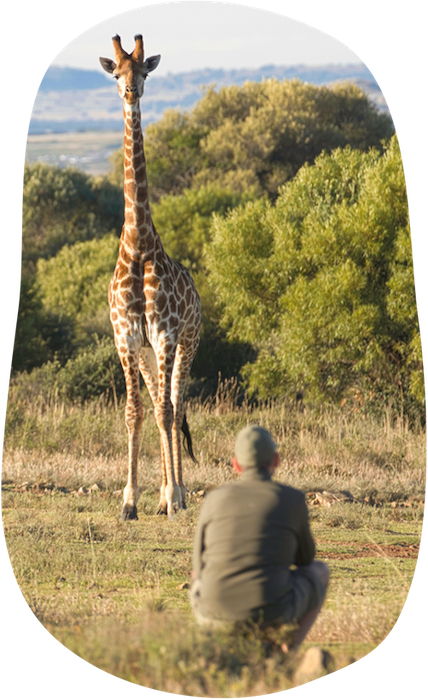
How do giraffes communicate, and what can sound tell them about the world around them? Giraffes live in dynamic societies and produce a variety of vocalizations, including hums, growls, snorts, bursts and hisses. Yet we still know relatively little about how they use these sounds in their interactions with one another.
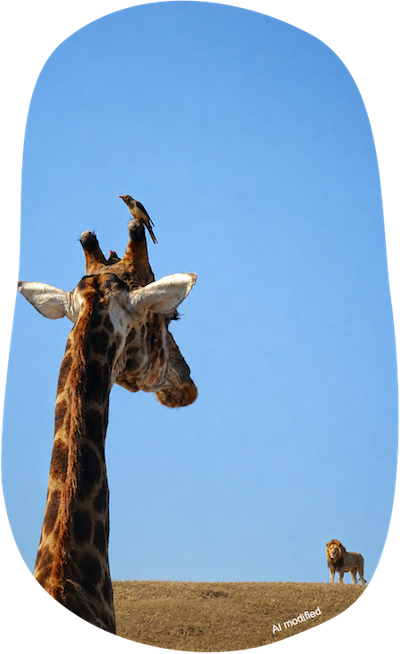
Their acoustic world also extends beyond their own calls. Lion vocalizations, oxpecker alarm calls and human-generated noise can provide information that influences how giraffes respond to their surroundings. Understanding these responses offers insight into how ecological experience shapes their perception of potential threats and disturbance.
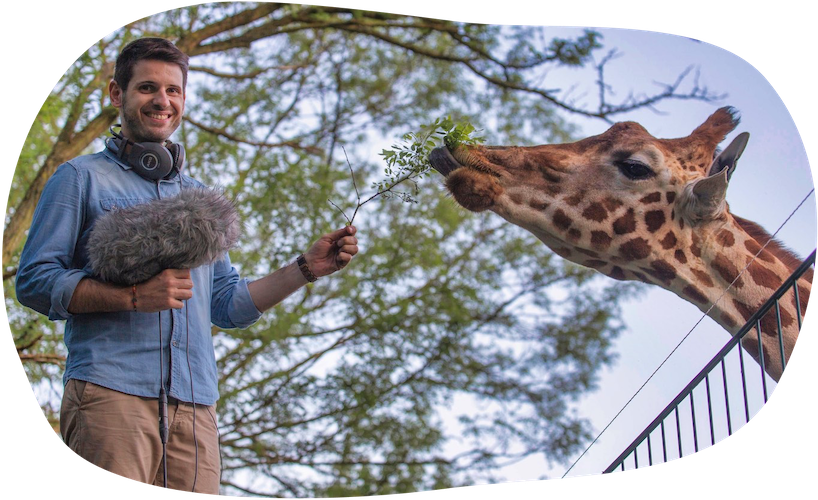
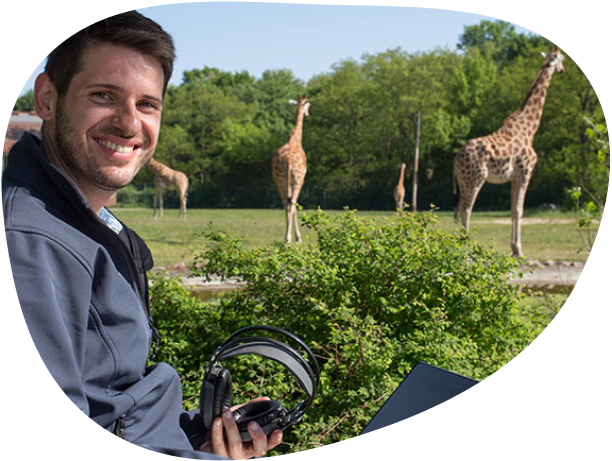
GIRAFFE OUT LOUD combines zoo and field research to investigate acoustic communication and the wider role of sound in giraffe behaviour and ecology. By studying how giraffes respond to one another and to sounds in their environment, the project aims to inform their conservation and management in an increasingly human-dominated world.
The discovery that started it..
Did you know that giraffes hum at night?
Colleagues and I discovered low-frequency humming in recordings from giraffes at three European zoos. These sounds were recorded exclusively at night, opening up new questions about the acoustic lives of these often-assumed silent animals.
The function of humming remains uncertain. Could it help giraffes maintain contact when darkness limits their ability to see one another? This discovery helped inspire GIRAFFE OUT LOUD and a broader question: what role does sound play in the lives of giraffes?
Listen to a giraffe humming in the recording below.
WHAT WE HAVE DISCOVERED
Giraffes listen to more than just to their conspecifics. Our research shows how they respond to predators, the alarm calls of other animals and human-generated noise, and also how their experiences shape these responses.
Experience shapes responses to lions
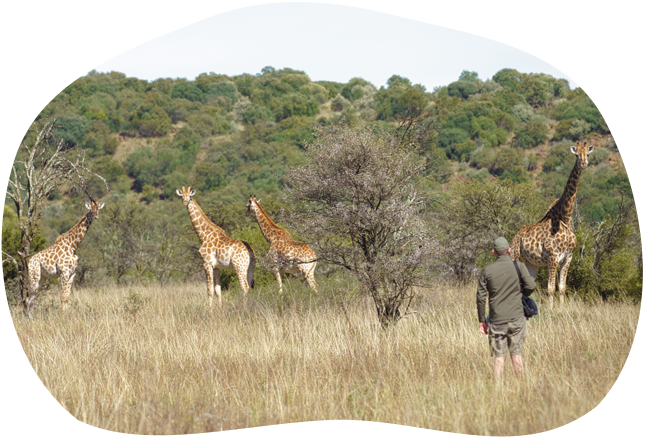
How do giraffes respond to the sound of a predator? We played lion vocalizations to wild giraffes in two South African reserves: one with lions and one without. Giraffes in both populations responded quickly, but those living alongside lions remained vigilant for substantially longer. These findings suggest that ecological experience shapes how long giraffes sustain their response to potential danger. > Read the study >
Giraffes listen to red-billed oxpecker alarms
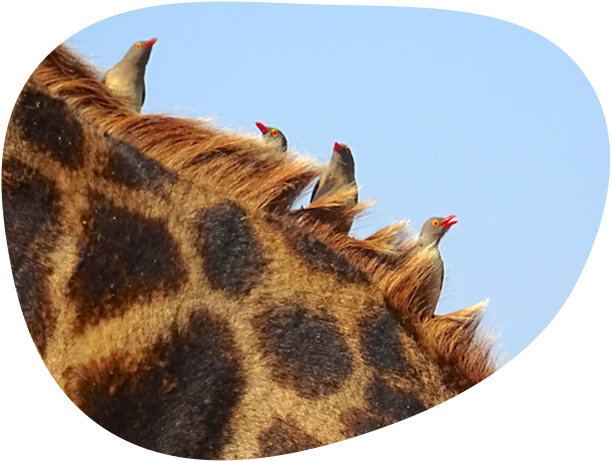
Oxpeckers may offer giraffes more than parasite removal. Our playback experiments showed that giraffes respond to these birds’ alarm calls even when the birds themselves are absent. Giraffes living in a reserve with lions remained vigilant longer than those in predator-free reserves, suggesting that experience with predators influences how they respond to warnings from another species. > Read the study >
Human noise changes giraffe behaviour
Drone noise, vehicle sounds and human voices can affect giraffe behaviour even without a visible source of disturbance. Across three South African reserves, giraffes responded more strongly to these sounds than to dove calls. Responses were particularly pronounced at the site with little routine human activity, highlighting the importance of considering the acoustic environment in giraffe conservation and management. > Read the study <
Different sounds carry different weight
Do giraffes respond equally to a lion’s call and an oxpecker’s alarm? When both types of sound were presented in different orders, lion vocalizations elicited stronger and more consistent vigilance, while responses to oxpecker alarms were generally weaker and more variable. The findings suggest that giraffes give greater weight to direct acoustic evidence of a predator than to indirect warnings from another species. > Read the study <